
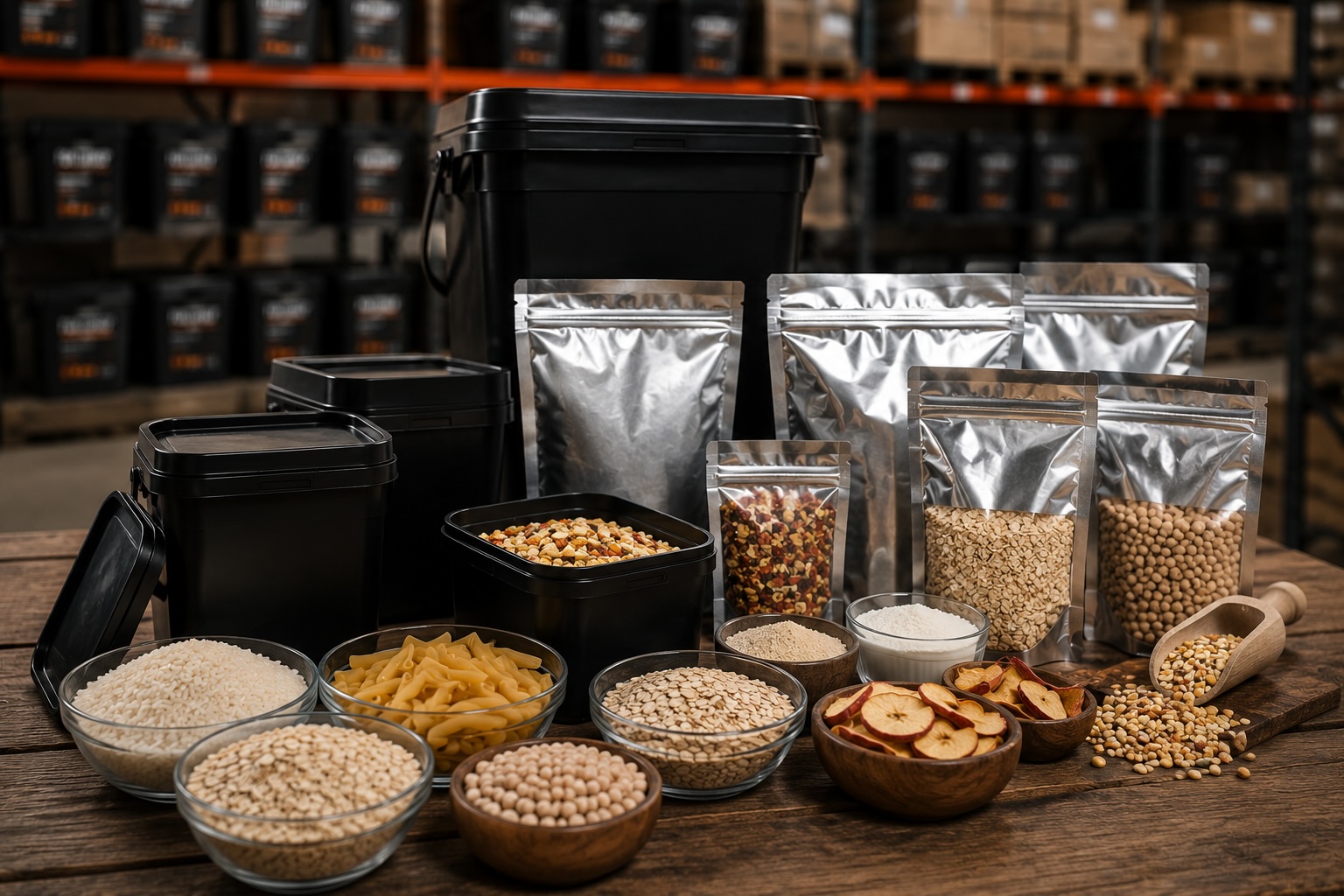
How is it possible that certain foods can remain edible for twenty or even twenty-five years without refrigeration?
At first glance, it sounds unrealistic. Many people assume that food preserved for such a long time must contain excessive chemicals or artificial preservatives.
In reality, the opposite is often true.
Long shelf life is not necessarily the result of “chemical preservation.” In most cases, it is the result of carefully controlling the environmental conditions that normally cause food to spoil.
Modern emergency food systems rely on a combination of:
- low moisture content,
- oxygen control,
- stable packaging,
- and microbiological stability.
When these factors are properly managed, food degradation slows dramatically.
Why Food Spoils
Food spoilage is mainly caused by four factors:
1. Moisture
Water allows bacteria, molds and yeasts to grow.
2. Oxygen
Oxygen accelerates oxidation, destroys vitamins and causes fats to become rancid.
3. Temperature
Higher temperatures increase chemical reactions and microbial activity.
4. Light
UV radiation can damage nutrients and packaging materials over time.
The science of long shelf-life food is essentially the science of minimizing these four factors.
The Most Important Factor: Water Content
Microorganisms need available water to survive. This is why dry foods can remain stable for extremely long periods.
Products such as:
- rice,
- oats,
- pasta,
- biscuits,
- freeze-dried meals,
- powdered milk,
- and dehydrated ingredients
contain very little moisture compared to fresh foods.
A fresh fruit may contain over eighty percent water.
A properly dehydrated emergency food product may contain less than five percent.
This difference is enormous.
Without moisture, bacteria cannot multiply efficiently.
Oxygen: The Invisible Enemy
Even if bacteria are controlled, oxygen still slowly damages food.
Oxygen causes:
- fat oxidation,
- loss of flavor,
- color degradation,
- vitamin destruction,
- and unpleasant odors.
This is why professional long-term food packaging often uses:
- oxygen absorbers,
- vacuum sealing,
- nitrogen flushing,
- or airtight multilayer barriers.
The goal is simple:
remove as much oxygen as possible from the storage environment.
Packaging Is More Important Than Most People Think
Many people focus only on the food itself.
But packaging technology is equally important.
A food product with excellent ingredients can still fail if:
- moisture enters,
- oxygen leaks in,
- or temperature changes damage the container.
Professional emergency food systems therefore use packaging designed for:
- humidity resistance,
- physical protection,
- light reduction,
- and long-term stability.
This is one reason why sealed bucket systems became popular in preparedness storage.
A stable outer container provides additional protection against:
- moisture,
- pests,
- accidental damage,
- and storage stress over many years.
Why Some Foods Naturally Last Longer
Not all foods are equally suitable for long-term storage. Foods that contain high amounts of unstable fats spoil faster.
For example:
- nuts,
- seeds,
- and vegetable oils
can become rancid relatively quickly compared to dry grains.
Meanwhile, foods such as:
- white rice,
- sugar,
- salt,
- dry pasta,
- honey,
- and certain dehydrated products
can remain stable for many years under proper conditions. Honey is especially famous for its durability. Archaeologists have discovered edible honey in ancient Egyptian tombs thousands of years old.
Freeze-Drying: One of the Most Advanced Preservation Methods
Modern premium emergency foods often use freeze-drying technology.
This process works by:
- freezing the food,
- lowering the pressure,
- and removing water through sublimation.
The advantage is that the food:
- retains much of its structure,
- flavor,
- color,
- and nutritional value.
Freeze-dried products can achieve extremely long shelf life while remaining lightweight and easy to transport. The downside is cost. Freeze-drying is expensive and energy-intensive.
Temperature Still Matters
A “25-year shelf life” does not mean the food is indestructible.
Storage conditions remain extremely important.
The ideal environment is:
- cool,
- dry,
- dark,
- and temperature-stable.
Heat accelerates chemical reactions dramatically. A product stored at thirty-five degrees Celsius may age several times faster than the same product stored at fifteen degrees. This is why garages, attics and vehicles are often poor choices for long-term emergency storage.
What About Nutritional Value?
One common question is whether vitamins survive for decades.
The answer is: partially.
Calories and macronutrients often remain relatively stable for very long periods if packaging is intact.
However, some vitamins degrade slowly over time, especially:
- Vitamin C,
- Vitamin A,
- and certain B vitamins.
This is why many preparedness experts recommend rotating vitamin supplements separately from long-term calorie storage.
Shelf Life Does Not Mean “Perfect Forever”
Another common misunderstanding is that shelf life represents a sudden expiration point. In reality, food degradation is gradual.
A properly stored product may still be edible long after its official shelf-life date, although:
- taste,
- texture,
- aroma,
- or nutritional quality
may slowly decline.
Manufacturers usually calculate shelf life conservatively based on:
- laboratory testing,
- packaging performance,
- oxidation rates,
- and microbiological safety margins.
Why Long Shelf-Life Food Is Becoming More Important
For most of modern history, people relied on:
- local food production,
- cellars,
- preserved foods,
- and seasonal storage.
Modern society replaced this with highly optimized “just-in-time” supply chains. This system is efficient — but fragile. Power outages, transport disruptions, cyberattacks, natural disasters or geopolitical instability can interrupt food distribution much faster than most people realize. Long shelf-life emergency food is therefore not only about extreme survival scenarios.
It is increasingly part of:
- household resilience,
- infrastructure preparedness,
- and practical risk management.
The Real Goal of Long-Term Food Storage
Preparedness is not about fear. It is about reducing vulnerability.
A properly designed long shelf-life food reserve provides:
- time,
- flexibility,
- stability,
- and independence during uncertain situations.
The science behind these products is not mysterious. It is simply the careful management of moisture, oxygen, temperature and packaging — combined with modern food preservation technology. And in an increasingly unpredictable world, that science is becoming more relevant every year.
Leave a Reply