
Many people think preparedness is a forced compromise:
“In a crisis, it doesn’t matter what we eat — as long as we have something.”
But this mindset misses the very reason modern crises become dangerous in the first place.
A crisis is not only a shortage of resources. It is stress, physical strain and mental pressure at the same time. In these situations, the human body does not need fewer nutrients — it needs more vitamins, energy and proper nutrition than under normal conditions.
The worse the situation becomes, the more important proper nutrition becomes.
Real preparedness is therefore not about storing cheap “hunger suppressors,” but about building a food structure that supports both physical performance and mental resilience.
During a crisis, people do not simply need to survive. They need to:
- make decisions,
- move in cold weather,
- carry water,
- care for children,
- manage stressful situations,
- and maintain physical and mental performance under pressure.
Why Proper Nutrition Becomes More Important During a Crisis
The human body functions differently under stress.
Cortisol levels rise, energy consumption increases and appetite often changes dramatically. Cold weather alone can increase energy requirements by thirty to forty percent.
If someone relies only on pasta and crackers during such conditions, blood sugar levels become unstable and recovery slows down.
After the Croatian earthquakes in 2023, studies showed that many people performing physical labor in cold conditions would have needed nearly twice as many calories as they actually consumed.
Malnutrition does not always mean starvation.
Often it simply means inadequate nutrient intake — and that can have serious consequences.
The Three Pillars of an Effective Emergency Food Supply
A real preparedness reserve should meet three essential requirements:
1. High Calorie Content
The body needs energy for physical work, cold temperatures and stress.
2. Adequate Protein Intake
Protein is essential for muscles, immune function and hormonal balance.
3. Vitamins and Micronutrients
Especially:
- Vitamin C
- Vitamin D
- B-complex vitamins
- Magnesium
- Zinc
If any of these are missing, the body weakens quickly and becomes far more vulnerable to fatigue, infection and environmental stress.
What Does This Mean in Practice?
1. Energy Sources: Stable, Slow-Releasing Carbohydrates
Many emergency food products rely heavily on dry pasta. Pasta is inexpensive and durable, but by itself it does not provide stable long-term energy.
In a crisis, the best foods are those that:
- release energy slowly,
- stabilize blood sugar,
- and require minimal water for preparation.
Examples include:
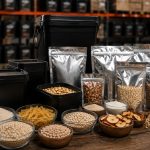
- rice,
- oats,
- couscous,
- bulgur,
- quinoa,
- lentils,
- beans,
- chickpeas.
Legumes are especially valuable because they provide both carbohydrates and protein.
2. Protein: The Foundation of Crisis Nutrition
Modern crises often lead to protein deficiency because most people rely on refrigerated foods in everyday life.
But refrigeration is usually one of the first systems to fail during a crisis.
Fresh meat, dairy products and processed meats spoil quickly without cooling.
Reliable crisis-friendly protein sources include:
- canned tuna and meat,
- beans and lentils,
- dried meat,
- egg white powder,
- milk powder,
- quality protein powder.
Many people are surprised to learn that a high-quality protein powder may actually be one of the best emergency foods:
- compact,
- shelf-stable,
- refrigeration-free,
- and capable of delivering twenty to twenty-five grams of protein per serving.
3. Vitamins and Minerals: The Silent Reserve
Modern people often underestimate how dependent the body is on micronutrients.
During stressful situations:
- Vitamin C consumption increases dramatically,
- lack of sunlight may contribute to Vitamin D deficiency,
- physical strain increases the risk of magnesium deficiency and muscle cramps.
A properly designed emergency food reserve should therefore also include:
- multivitamins,
- Vitamin D,
- magnesium,
- Vitamin C,
- zinc.
Not because of “health obsession,” but because without them the body becomes overloaded much faster during prolonged stress.
Why Buying Only Canned Food Is Not Enough
Canned food can sustain life temporarily, but it is rarely nutritionally complete over the long term.
For two or three weeks it may work reasonably well.
Beyond that, nutritional deficiencies and mental exhaustion become increasingly likely.
Food during a crisis is not only calories.
It is also psychological stability.
Monotonous food can have a depressive effect. Lack of variety itself becomes a source of stress.
That is why a balanced emergency reserve should also include:
- sweet flavors (honey, jam, chocolate),
- crunchy textures (nuts and seeds),
- natural fats (olive oil, coconut oil, sunflower oil),
- comfort foods (oatmeal, instant soups, crackers, cereals).
In a crisis, these are not luxuries.
They support mental resilience.
Lessons from Recent Crises
In the early weeks of the Ukraine war in 2022, many refugee camps experienced not only food shortages, but severe nutrient deficiencies.
People often had access to pasta, rice and crackers — but lacked sufficient protein, fats and vitamins.
After the Turkish earthquakes in 2023, dietitians reported that many displaced families were “full of food, yet still starving,” because their bodies were not receiving the nutrients needed under extreme stress.
In the summer of 2024, during heatwave-related infrastructure problems in southern France, hundreds of people suffered heatstroke partly because they attempted to cope without adequate hydration and electrolyte intake.
The Goal of a Balanced Emergency Food Supply
The difference between survival and functionality is enormous.
A person may survive on crackers, pasta and low-quality calories.
But functioning — physically and mentally — requires proper nutrition.
And during a crisis, people must function:
- carry water,
- split firewood,
- care for others,
- make decisions,
- handle stress,
- adapt to heat or cold,
- and continue operating under difficult conditions.
A prepared household does not aim for the bare minimum required for survival.
It aims to preserve capability, stability and resilience.
That is the difference between nutrient-poor survival and healthy crisis preparedness.

Leave a Reply